By Justin Lock, Not In Our Town Executive Director
Over the past few weeks, our communities of faith have again been shaken by violence. Just this past weekend, a deadly attack struck a Church of Jesus Christ of Latter-day Saints congregation in Grand Blanc, Michigan, when a man drove a vehicle into the building, then opened fire and set a fire—four people died and several more were wounded. On August 27, a gunman opened fire through stained glass windows during Mass at Annunciation Catholic School in Minneapolis, killing two children and injuring more than a dozen others. Meanwhile, Jewish and other faith communities remain under threat: earlier this month, just four days before the Jewish holiday of Rosh Hashanah, the Chabad in Charlotte County, Florida was subject to a fire being investigated as arson. In Novato, California, a man was arrested after crashing his car into a mosque and attacking a member inside. And in August, a Hindu temple in Greenwood, Indiana was defaced with bigoted graffiti just days before a major Hindu religious festival.
While the specific motivations for some of these incidents are still under investigation, the impact on the minds and hearts of faith communities is unmistakable. When sacred spaces are under threat, a fundamental pillar of the American experience—the right to worship and practice one's religion freely—is put at risk.
These horrors cannot be dismissed as random or isolated. They reveal a pattern: places meant for prayer, community, and sanctuary are being attacked, and the injured and grieving belong to all faiths and those of no organized tradition.
As a country, we must confront this threat not only at the moment of violence, but far earlier—when hate is still gathering its strength in the shadows. Hate must be rooted out before it festers. Whether it manifests in lone actors radicalized online or in organized groups fueled by conspiracy and bigotry, its growth is almost always incubated by isolation and disconnection. As communities, we all have access to a powerful antidote. When people feel seen, supported, and engaged in community—especially across lines of faith, race, and identity—the power of hate to recruit, isolate, and explode into violence is diminished. Prevention begins not just with hardened walls, but with open hearts and relationships that offer belonging over alienation.
At Not In Our Town, we believe one of our most urgent responsibilities is to call for deeper solidarity and preparedness. In my past work at the U.S. Department of Justice’s Community Relations Service, I helped convene “Protecting Places of Worship” forums for churches, synagogues, gurdwaras, mandirs, temples, and other houses of worship. I visited with groups touched by violence and destruction, from mass shootings, to arson, to cyber and telephone threats meant to intimidate and paralyze with fear, hoping to catalyze healing and build future resilience. In those conversations, we brought together congregants, faith leaders, local law enforcement, business and civic partners. Yes, we talked about physical countermeasures—better lighting, reinforced doors, cameras, fences—but the most lasting impact came not just from the barriers that were erected, but also from the bridges that were built, relationships that might never have formed otherwise.
Those connections matter. When a rabbi, a pastor, an imam, or pundit, their congregation members, and neighbors know one another, commit to mutual vigilance, and affirm each other’s safety and dignity, the threat of hate has fewer footholds. When law enforcement knows faith communities not only as clients but as partners in resilience, the space for violence shrinks.
In the wake of these recent attacks, we must reject fear and isolation. We must actively replace them with compassion, connection, and courage. Congregants should feel empowered to know their neighbors and their local public safety partners. Faith leaders should make visible efforts to cross religious divides and convene with other congregations. Law enforcement must continue reaching outward—to build trust, share training, conduct threat assessments, and field safety planning in collaboration with religious institutions. And neighbors—those who live or work near places of worship—have a vital role: to stay aware, to ask, “How can I help?” and to respond when alert systems, community patrols, and information-sharing are part of the local fabric.
Solidarity isn’t passive. It demands action: offering eyes and ears, hands and heart, joining safety committees, helping fund security upgrades, building interfaith networks of support before violence arrives. And it demands moral clarity: when hate targets one community, it imperils all communities.
We who lead, worship, and walk beside one another—let us resolve that no fear will divide us, no attack will isolate us, no violence will succeed in silencing our collective witness. Before the next headline, let us be ready—together.
Five Things You Can Do Now
-
Reach out to a person of a different faith than yours
-
Join and support United Against Hate Week
-
Take the pledge, join with your neighbors or display a poster
-
Become active with Not In Our Town by exploring our Action Kit and join communities working to stand up to hate together
-
If you are a faith leader, take the opportunity to speak to your members about the importance of uniting against hatred and violence.
| Attachment | Size |
|---|---|
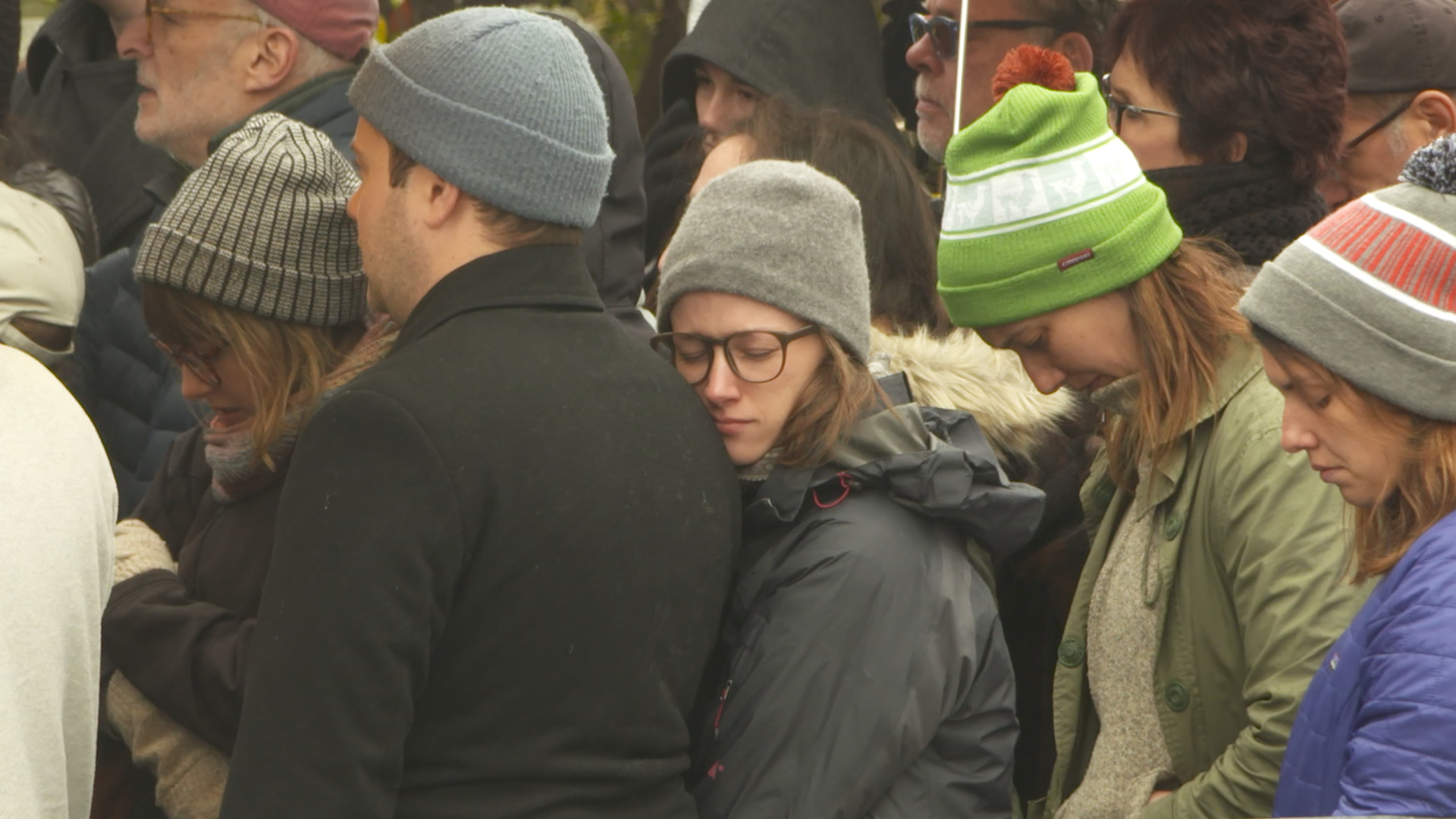
 Pittsburgh neighbors grieve after eleven people are killed at Tree of Life synagogue in 2018. Pittsburgh neighbors grieve after eleven people are killed at Tree of Life synagogue in 2018. | 602.44 KB |