Welcome to the Black History Month page. Here you'll find all of our blog posts, in descending order, posted in celebration of this commemorative month in February 2011.
Feb. 23: Youth Advocate: Dr. Joseph Marshall Jr.
As Black History Month nears an end, we share this profile of outstanding youth advocate, Dr. Joseph Marshall Jr. Dr. Marshall is the host of nationally syndicated radio talk show, Street Soldiers. The Street Soldiers website highlights some of Dr. Marshall's achievements during his decades of work in education and youth advocacy:
Dr. Marshall is the first person to classify youth violence as a disease, and his work has been recognized in the 2001 Surgeon General's Report on Youth Violence. As Executive Director of the Omega Boys Club, he oversees the Omega Leadership Academy for academic and life skills education, the Omega Training Institute on violence prevention; and Street Soldiers Communications, which includes a nationally syndicated radio talk show.
He is the recipient of numerous awards and honors, including the McArthur Foundation Genius Award, the Leadership Award from the Children's Defense Fund, the Essence Award honoring outstanding contributions by African American men, the Martin Luther King, Jr. Memorial Award from the National Educational Association, and the "Use Your Life Award" from Oprah Winfrey's Angel Network. He is also the author of the 1996 best-selling book, Street Soldier: One Man's Struggle to Save a Generation, One Life at a Time.
This is one of more than 20 films produced by Not In Our Town's parent company, The Working Group, for Unity Lab.
Feb. 16: Sitting In and Eating In: Challenging Racial Injustice Then and Now
On Feb. 1, 1960, four young black students sat at the whites-only Woolworth lunch counter in Greensboro, N.C., where they were refused service by staff and heckled by patrons. By fall, sit-ins spread to more than 100 Southern cities and historians estimate that as many as 100,000 participated in the non-violent protest. These couragous acts continue to inspire the anti-hate movement today.
Here are clips from the PBS documentary, Eyes on the Prize. The historical footage includes students walking to lunch counters and students leaders describing their motives and strategies. Our education partners at Facing History created an Eyes on the Prize study guide.
Diane Nash describes the sit-ins:
After we had started sitting in, we were surprised and delighted to hear reports of other cities joining in the sit-ins. And I think we started feeling the power of the idea whose time had come. … When you are that age, you don't feel powerful. I remember realizing that with what we were doing, trying to abolish segregation, we were coming up against governors, judges, politicians, businessmen, and I remember thinking, I'm only twenty-two years old, what do I know, what am I doing? And I felt very vulnerable. …The movement had a way of reaching inside you and bringing out things that even you didn't know were there. Such as courage. When it was time to go to jail, I was much too busy to be afraid.
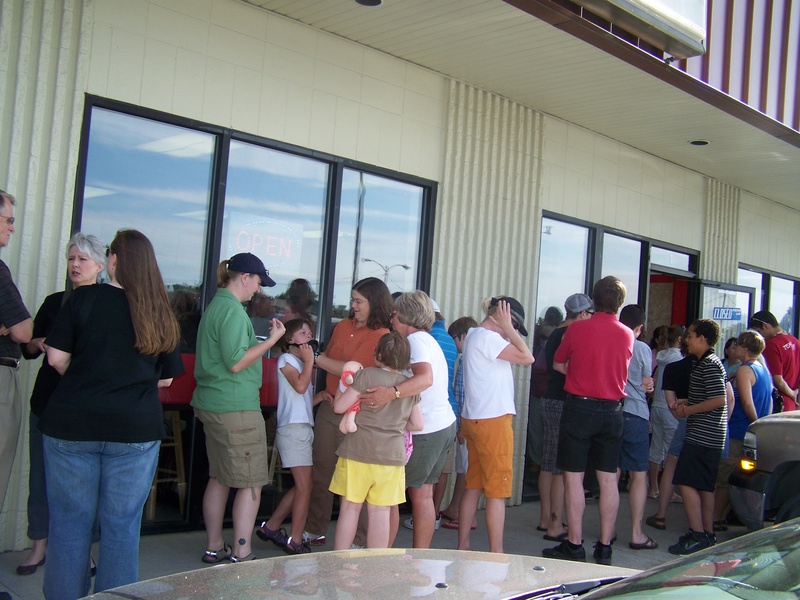 When Billings, Mont. was hit with a wave of hate-motivated vandalism in 2008, the local Not In Our Town Billings group took a page from the sit-ins of the 1960s and staged "eat-ins" at restaurants that had been vandalized by inviting the community to support these targeted businesses.
The vandalism began with hate graffiti spray painted on the building of Papa Eddie’s Grill and a brick thrown through one of the windows of the minority-owned business. The brick had a swastika and the words “scum out” painted on it and the same words and sign were spray painted on the building.
That same week four other minority-owned businesses were vandalized with the words “scum out” and “white power” painted on them. The Rimrocks set above the north side of the city were also tagged with over a 100-feet of white supremacist graffiti and a large Nazi flag.
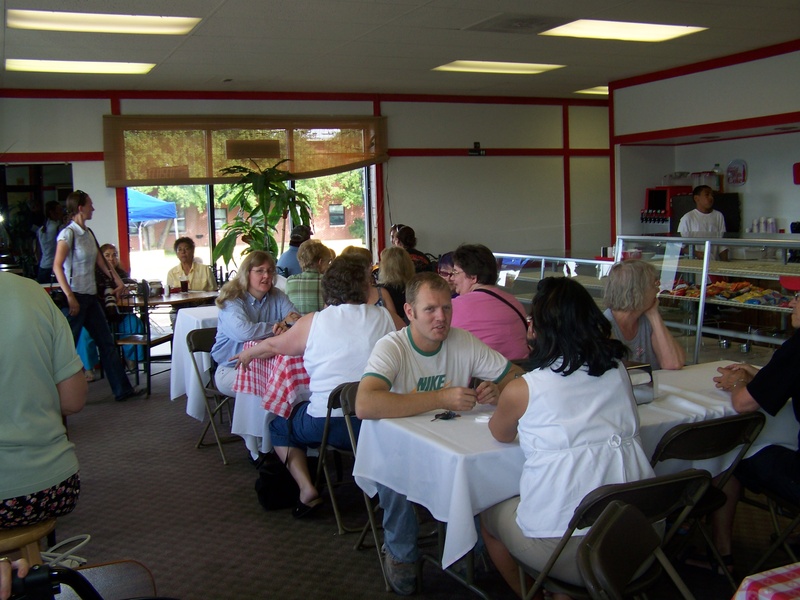 Like the sit-ins, the eat-ins were a way to publicly show support for diversity. Every other Tuesday for six weeks, NIOT Billings held eat-ins, sometimes attracting hundreds of customers. Michael Crummet, a board member of NIOT Billings, said the goal of the eat-ins was not only to support the owners of the vandalized businesses, but also to give residents a chance to take a stand against hate crimes. “This is the positive response we want to have, as a community, to any sort of racist declaration.”
For more information, see the original article here. For more photos of the eat-ins, visit the Not In Our Town Billings website.
Feb. 15—"Smart is the new gangsta": Profiling Kevin
For Black History Month, we share this video, "Profiling Kevin," featuring a young man whose passion for racial and social justice leads him to engage his teachers and classmates about issues of diversity and equality in his school and community. Standing in a classroom at Palo Alto High School, 16-year-old Kevin tells his classmates, "We need to ... take a bite of the apple of knowledge and realize where we stand and where we need to go."
Feb. 11: Life as a House: Video of Rep. Lewis Talking About His Aunt's Shotgun House and Bringing America Together
From our educational partners at Facing History and Ourselves comes this video of Congressman John Lewis of Georgia, a man called "one of the most courageous persons the civil rights movement ever produced." Rep. Lewis was among the Freedom Riders and later chaired the Student Nonviolent Coordinating Committee that challenged segregation in the South. He wrote the foreword to Facing History's study guide for the documentary, Eyes on the Prize.
During Black History Month, we will be sharing a number of resources that touch upon the continued struggle and incredible inspiration that stems from African-American history. This video, in particular, captures the importance of coming together as a nation. As Rep. Lewis says:
"We must build one house, we must build one family. We must build a house that's strong enough for all of us as we face history, as we face ourselves. Walk with the wind, let the spirit of history be our guide."
This video is part of Facing History's "Choosing to Participate" sequence, which focuses on how understanding the past can connect with the issues of today. Several Not In our Town stories are also part of this sequence.